


Why Choose Aluminum Doors for Global Projects?
Why Choose Aluminum Doors for Global Projects? The answer begins with performance, not appearance. Aluminum doors are lightweight, corrosion resistant, and suitable for demanding climates. They can face coastal humidity, intense sunlight, heavy rain, and frequent public use. Their narrow frames also create wider openings, bringing more daylight into airports, offices, hotels, and residential towers.
Building-envelope specialist Mark Fenster explains, “A reliable door must perform quietly, repeatedly, and in the climate where it is installed.” This practical view matters. A door may look excellent in a showroom, yet fail when poor drainage meets freezing temperatures. Global projects need tested systems, accurate installation, and suppliers who understand local exposure conditions. Thermal breaks, weather seals, hardware quality, and frame tolerances deserve close attention.
The material offers useful flexibility. Aluminum doors can support large glass panels, custom finishes, automated access, and consistent design across different buildings. Powder coating and anodizing may help protect surfaces, but neither removes the need for maintenance. That point is easy to overlook.
There is no universal specification. Coastal sites need stronger corrosion planning. Cold regions require careful thermal performance. Busy entrances need durable hinges and replacement parts. Even the best aluminum doors can disappoint when measurements, logistics, or installation are handled casually. A better decision comes from comparing verified test data, project experience, warranty terms, and after-sales support. Performance is not promised by metal alone. It is built through disciplined choices.

Material Profile: Aluminum’s 2.70 g/cm³ Density Supports Lightweight Door Systems
Why Choose Aluminum Doors for Global Projects?
Material Profile: Aluminum’s 2.70 g/cm³ Density Supports Lightweight Door Systems
Aluminum has a density of approximately 2.70 g/cm³, making it far lighter than common steel. This property helps project teams handle large door panels with less lifting equipment. On a busy site, a lighter frame can reduce transport effort, installation strain, and damage during positioning. It also supports slimmer profiles when engineers select suitable alloys and wall thicknesses.
The benefit is practical. A door leaf can move more smoothly on its hinges, while installers can align frames more easily around finished floors and wall openings. This matters in airports, offices, hospitals, and coastal facilities where access conditions often change. However, aluminum doors are not automatically lightweight. Glass, hardware, thermal breaks, reinforcement, and oversized dimensions can increase the final mass considerably.
Good design starts with the complete door assembly, not the metal alone. Engineers should review wind pressure, opening size, traffic frequency, corrosion exposure, and fixing conditions. Alloy selection also needs care because strength and formability differ between grades. A poorly sized frame may flex, even when the material appears modern and efficient. That is an important limitation.
For international projects, consistent fabrication drawings and clear installation tolerances improve reliability. Test samples can reveal unexpected movement, gasket compression, or hinge wear before production begins. The 2.70 g/cm³ density provides a strong starting advantage, but thoughtful detailing determines whether that advantage survives on site.
Why Choose Aluminum Doors for Global Projects?
Material Profile: Aluminum’s 2.70 g/cm³ Density Supports Lightweight Door Systems
| Material / Property | Aluminum | Carbon Steel | Stainless Steel | uPVC | Design Relevance |
|---|---|---|---|---|---|
| Typical density | 2.70 g/cm³ 2,700 kg/m³ |
7.85 g/cm³ 7,850 kg/m³ |
Approximately 8.00 g/cm³ 8,000 kg/m³ |
Approximately 1.40 g/cm³ 1,400 kg/m³ |
Lower density than steel allows lighter metal door frames and panels when comparable material volumes are used. |
| Mass of 1 m³ of material | 2,700 kg | 7,850 kg | Approximately 8,000 kg | Approximately 1,400 kg | A reference calculation based on density: mass = density × volume. Actual door weight depends on section geometry, infill, glazing, hardware, and reinforcement. |
| Relative mass at equal volume | 1.00× | 2.91× aluminum | 2.96× aluminum | 0.52× aluminum | Aluminum offers a lower-mass alternative to steel while retaining a rigid metal framework; uPVC is lighter but has different structural and durability characteristics. |
| Typical thermal conductivity | Approximately 205 W/m·K | Approximately 50 W/m·K | Approximately 15 W/m·K | Approximately 0.17 W/m·K | Aluminum is highly conductive, so thermally broken profiles, insulated frames, suitable glazing, and correct installation are important for energy-efficient doors. |
| Corrosion behavior | Forms a protective oxide layer; performance depends on alloy, finish, environment, and contact with dissimilar metals. | Requires suitable coating or protection in many exposed environments. | Generally strong corrosion resistance; grade selection remains important. | Does not rust, but may be affected by ultraviolet exposure, heat, and formulation. | For coastal, humid, or industrial locations, specify the alloy, surface treatment, fasteners, drainage, and maintenance requirements for the exposure class. |
| Structural efficiency | Good stiffness-to-weight potential when designed with hollow or reinforced profiles. | High strength and stiffness, but greater density increases handling loads. | High strength and corrosion resistance, with higher density than aluminum. | Suitable for many residential and light-duty applications; structural limits depend on profile and reinforcement. | Profile geometry, wall thickness, reinforcement, hardware, and tested system performance matter more than density alone. |
| Handling and installation implication | Lower material mass can simplify transportation, positioning, and manual handling for suitably designed systems. | May require more lifting capacity and stronger handling provisions for equivalent material volumes. | Handling requirements are typically higher because of greater density. | Very light, but installation must account for profile movement, reinforcement, and fastening requirements. | Lower installed mass may help projects with restricted access, high-rise logistics, or long-distance transport, subject to local safety procedures. |
| Recycling consideration | Aluminum can be recycled repeatedly without losing its basic metallic properties; collection and separation determine actual recovery. | Steel is widely recyclable; recovery depends on collection, sorting, and processing infrastructure. | Stainless steel is recyclable; recovery depends on material separation and local facilities. | Recycling routes vary by product formulation and local collection systems. | Specify separable components, document material types, and consult local end-of-life requirements for the project location. |
Related Posts
-
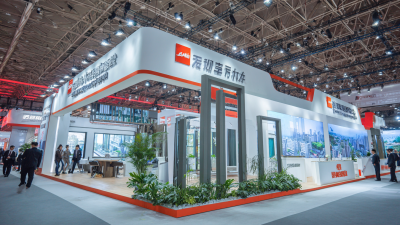
Emerging Trends in Aluminum Doors at the 2025 China Import and Export Fair
-

How to Choose the Best Aluminum Doors for Your Home?
-
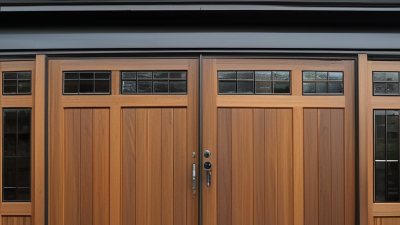
Top 10 Benefits of Aluminum Doors for Global Buyers
-
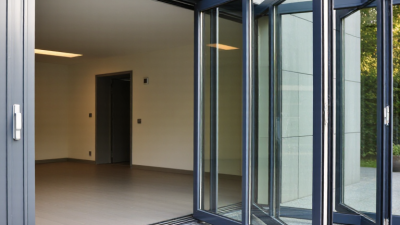
What Types of Aluminum Doors Are Best for Your Project?
-

How to Choose the Perfect Home Entry Doors for Security and Style
-

What is the Best Material for Home Entry Doors and Why It Matters