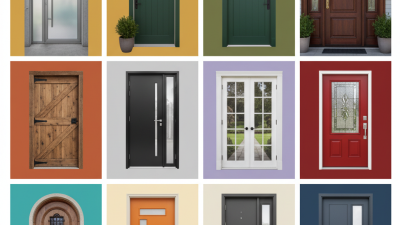
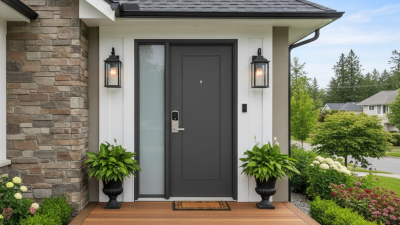
Choosing the best front entry doors in China requires more than comparing colors, prices, and decorative panels. A reliable decision starts with climate, security, installation quality, and long-term maintenance. China spans humid coastal cities, freezing northern regions, and dusty inland areas. Therefore, one door specification cannot suit every home.
Industry reports support this practical approach. Grand View Research identifies energy efficiency, durability, and improved residential construction as major influences in the global doors market. Mordor Intelligence also highlights China’s continuing demand for residential doors and windows, driven by renovation and urban housing development. Meanwhile, China’s National Bureau of Statistics regularly reports substantial investment in residential construction and renovation. These figures show market activity, but they do not prove that every popular door performs well.
A strong candidate should use corrosion-resistant hardware, stable core materials, reliable weather seals, and tested locking systems. Look closely at the threshold. It should resist rainwater without creating a trip hazard. Check the hinges, frame joints, and powder coating under natural light. Small defects often appear there.
Steel doors can provide strength. Aluminum doors offer lighter handling and corrosion resistance. Solid wood creates warmth, but it needs careful moisture control. Composite designs may balance appearance and insulation. No material wins everywhere.
The best choice depends on the building’s exposure, entrance size, security needs, and installer expertise. I would also question unusually low prices. They may reflect thinner panels, weaker hardware, or incomplete after-sales support. This guide compares China front entry doors through practical evidence, not showroom claims, while recognizing that real-world performance can still vary.
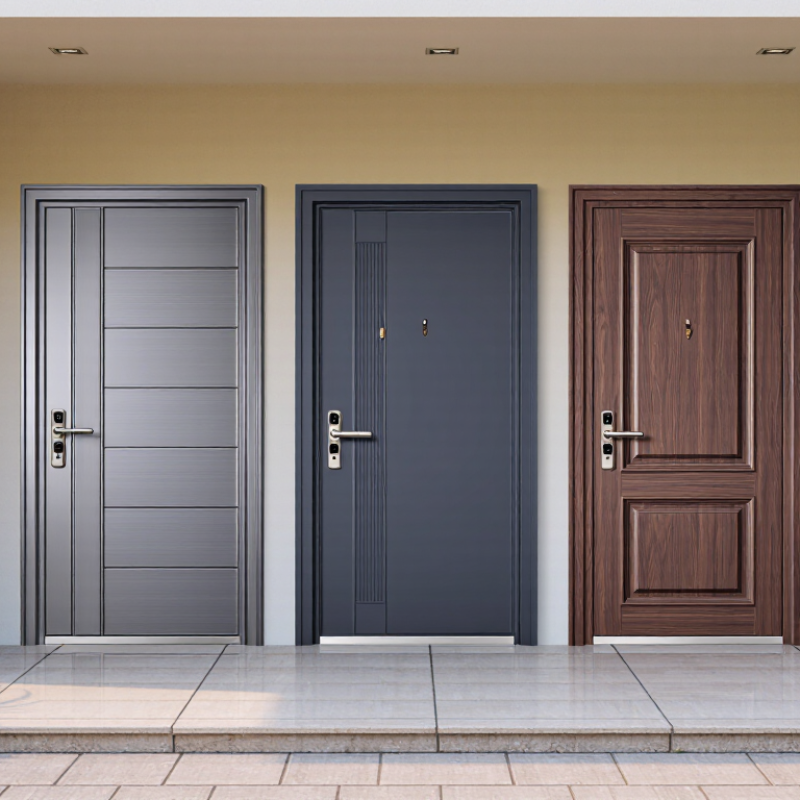
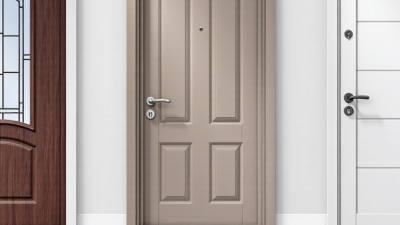
China front entry doors mainly include steel security doors, aluminum alloy doors, solid wood doors, and insulated composite doors. Steel doors offer strong impact resistance and lower maintenance. Aluminum alloy doors resist moisture, making them practical in coastal cities. Solid wood feels warm and substantial, but it needs careful sealing against humidity. Composite doors often balance insulation, weight, and design flexibility. Smart locking systems add convenience, yet electronics should not replace a strong cylinder, reinforced frame, and reliable installation.
According to China’s National Bureau of Statistics, urban residents reached 67.00% of the population in 2024. This urban growth supports demand for apartment renovation and better entry performance.
The China Academy of Building Research emphasizes airtightness and thermal performance in energy-efficient building design. A well-fitted door reduces drafts around the threshold and frame.
Small gaps matter. Industry testing commonly examines air leakage, water resistance, wind pressure, and mechanical strength under Chinese standards such as GB/T 8478-2020.
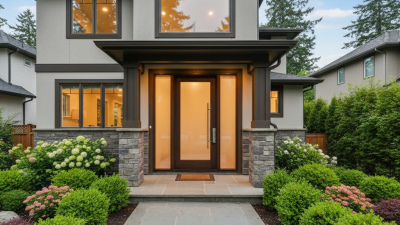
For exposed entrances, look for galvanized steel cores, multi-point reinforcement, weather-resistant coatings, and adjustable seals. For villas, insulated aluminum or engineered wood may provide better visual warmth. Security ratings alone can mislead; frame anchoring and installation quality are equally important.
I have found that attractive doors sometimes underperform because the threshold is poorly drained. That detail deserves more attention. Reported specifications also need checking, since laboratory values may not reflect a real doorway, local weather, or imperfect construction.
The best China front entry doors balance material strength, careful construction, and local weather resistance. In humid coastal cities, fiberglass or treated hardwood can resist swelling better than untreated wood. Steel offers strong security and stable performance, but its surface needs reliable anti-rust protection. A door is only as durable as its weakest edge. Pay attention to the sill, corners, hinges, and drainage path. These details often face rain before the main panel does.
Construction quality matters more than appearance alone. A well-built door should use accurate joints, reinforced hinge areas, and a tight perimeter seal. Multi-layer panels can reduce heat transfer and limit moisture movement. Double seals help block wind-driven rain, dust, and street noise. However, no door remains perfect without correct installation. I have seen attractive doors fail because the frame was slightly out of square. That small error caused rubbing, air leaks, and uneven pressure on the lock. Ask for water testing, material specifications, and clear warranty terms. Be cautious: impressive thickness does not always mean better insulation.
Tips: Match the door to your climate. Choose corrosion-resistant hardware near the sea. Keep a small threshold slope outside. Inspect seals every season. If water collects at the base, repair the drainage quickly.
Material selection, construction method, and weather resistance all affect the performance of a front entry door. The chart compares representative thermal conductivity ranges of commonly used door materials and cores. Lower values generally indicate better insulation, while the complete door assembly must still be evaluated for air leakage, water penetration, wind load, and installation quality.
Weather-resistance checklist: Insulated composite or fiberglass doors with polyurethane cores typically provide strong thermal performance. Steel doors can be durable when properly galvanized, sealed, and insulated. Timber doors require effective coatings, edge sealing, and protection from prolonged moisture. For reliable outdoor performance, check air-permeability, watertightness, wind-load, and thermal-transmittance test results for the complete door assembly.
Representative thermal-conductivity ranges are shown in W/m·K and are based on commonly published engineering values for typical materials. Actual performance varies with density, thickness, moisture content, joints, glazing, frame design, and installation.
Choosing the Right Door Style for Your Home
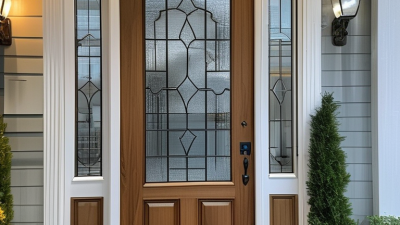
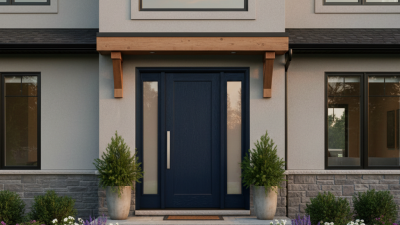
A front entry door should match your home’s architecture, climate, and daily routine. For a modern Chinese townhouse, a clean steel door with narrow glass panels creates a strong, balanced entrance. Traditional homes may suit a timber-look door, but real wood needs regular sealing in humid regions. I learned this the hard way after moisture caused slight swelling near a shaded threshold. It looked minor. It was not.
Measure the opening, wall depth, swing direction, and nearby furniture before choosing a style. A wide pivot door looks impressive, yet it needs clear interior space and strong structural support. For apartments, a single insulated door often works better than an oversized design. The U.S. Department of Energy estimates that windows account for 25–30% of household heating and cooling energy use; the figure is not door-specific, but it shows why airtight construction matters. Check weatherstripping, low-conductivity cores, drainage, and certified performance ratings. The 2024 Cost vs. Value report places steel entry-door replacement among high-return exterior upgrades, with reported cost recovery above 180% in its U.S. sample. That result is regional, not guaranteed in China. A door’s best style is the one that opens smoothly, seals quietly, and still looks right after years of rain, dust, and rushed mornings.
| Door style / material | Typical construction | Best suited for | Advantages | Limitations | Maintenance level | Typical glazing options | Overall selection value |
|---|---|---|---|---|---|---|---|
| Solid wood panel door | Natural timber boards or laminated wood panels, usually installed in a wood or composite frame. | Traditional, rustic, heritage, and high-end residential façades. | Warm appearance, authentic texture, good repairability, and strong design flexibility. | Can absorb moisture, expand, contract, or warp if poorly sealed or exposed to severe weather. | High; inspect finishes and renew protective coatings as needed. | Clear, laminated, or decorative insulated glass, preferably with sealed edges. | Excellent for appearance and customization when regular upkeep is acceptable. |
| Engineered wood door | Wood veneers over laminated or composite cores designed to reduce movement compared with solid timber. | Homes requiring a wood appearance with improved dimensional stability. | More stable than many solid-wood designs, attractive finish options, and good insulation potential. | Edges and exposed surfaces still require careful sealing; quality varies with core and veneer construction. | Medium to high; keep the finish intact and protect vulnerable edges. | Decorative glass panels, narrow sidelights, or insulated glazing. | A balanced choice for homeowners who want a wood look with reduced seasonal movement. |
| Fiberglass composite door | Molded fiberglass skin over an insulated polyurethane or polystyrene core. | Most climates, especially entrances exposed to humidity, rain, or strong sunlight. | Low maintenance, good resistance to moisture and corrosion, and wood-grain finishes are available. | Deep damage can be difficult to repair, and low-quality skins may look less natural. | Low; clean periodically and inspect seals and hardware. | Insulated glass, privacy glass, or small decorative inserts. | One of the strongest all-around choices for durability, efficiency, and easy care. |
| Insulated steel door | Steel skins over a foam-insulated core, commonly paired with reinforced locks and a weather-sealed frame. | Urban homes, security-focused entrances, and areas needing a rigid door leaf. | High rigidity, strong impact resistance, and good thermal performance when properly insulated. | Scratches or damaged coatings may expose the steel to corrosion; thermal bridging is possible. | Low to medium; repair coating damage promptly and maintain seals. | Small vision panels or laminated safety glass; larger glazing reduces privacy and rigidity. | A practical option when security and strength are higher priorities than natural texture. |
| Aluminum framed glass door | Aluminum frame with single, laminated, or insulated glass panels; thermally broken frames improve performance. | Contemporary homes, apartments, bright entry halls, and sheltered entrances. | Slim profiles, abundant daylight, corrosion resistance, and modern visual appeal. | Glass can reduce privacy and increase heat gain or loss if it is not insulated and correctly specified. | Low; clean glass, check drainage, and lubricate hardware when required. | Laminated safety glass, tempered glass, low-emissivity insulated glass, or frosted glass. | Best for modern design and daylight, provided privacy, safety, and solar control are addressed. |
| Pivot entry door | Large door leaf supported by pivot hardware positioned at the head and floor rather than conventional side hinges. | Large contemporary entrances with sufficient clearance inside and outside the opening. | Striking appearance, broad opening potential, and suitability for oversized door panels. | Requires accurate structural support, careful weather sealing, and more clearance than a hinged door. | Medium to high; pivot hardware and seals need periodic adjustment and inspection. | Narrow side glazing, decorative inserts, or a mostly solid panel. | A design-led choice for spacious properties, but installation quality is especially important. |
| Double entry door | Two coordinated door leaves, commonly with an active leaf and a secondary leaf secured by flush bolts. | Wide foyers, formal residences, and homes requiring a generous furniture or people-moving opening. | Wider access, strong architectural presence, and flexible day-to-day opening width. | More perimeter joints can make weather sealing, alignment, and security hardware more demanding. | Medium; maintain both leaves, meeting stiles, bolts, hinges, and weather seals. | Decorative glass, sidelights, transoms, or solid panels. | Ideal for wide entrances when the frame, threshold, and locking system are correctly coordinated. |
Key specifications to check before purchasing
The best China front entry doors balance security, durable hardware, and measured energy performance.
A thick steel or aluminum panel helps, but thickness alone proves little. Check the complete assembly, including the frame, hinges, locks, glass, and threshold.
Multi-point locking can distribute pressure across several points. Look for tested resistance under EN 1627 or equivalent national standards. China’s GB 17565 standard also provides a useful reference for security door construction.
Hardware should resist corrosion, repeated cycling, and forced misalignment. A reliable cylinder matters too.
Ask for test reports, not attractive claims. A heavy door is not automatically safer.
The International Energy Agency’s 2023 buildings report states that buildings produce about 26% of global energy-related emissions.
A poorly sealed entrance can add drafts, noise, and moisture problems. Choose continuous weatherstripping, a thermal break, and insulated core materials.
China’s GB/T 7106-2019 standard evaluates air permeability, watertightness, and wind resistance for doors and windows. Lower air leakage is generally preferable.
The U.S. Department of Energy also recommends comparing U-factor and solar heat gain when evaluating glazed areas. Small glass panels still need careful specification.
Installation remains the weak link. Even a well-tested door can perform poorly after rushed fitting or an uneven threshold.
Check the seal with a paper strip, then inspect it again after seasonal temperature changes.
Some compromises are unavoidable. The best choice matches local climate, entry exposure, and daily use.
Choosing the best China front entry door starts with installation, not decoration.
A well-made door can still perform poorly when the frame sits out of square. I recommend checking the opening with a level before delivery. Measure width, height, wall thickness, and swing direction twice. Small errors become expensive later.
Seal the frame carefully around the entire perimeter. Use suitable flashing, backer material, and exterior-grade sealant for the local climate. The threshold should shed water, not collect it.
After installation, open and close the door several times. It should move smoothly without rubbing, rattling, or forcing the lock. I once trusted a quick visual check, and seasonal movement exposed a small alignment problem. That mistake taught me to test doors in different temperatures when possible.
Maintenance protects long-term value.
Clean the surface with mild soap, inspect seals twice yearly, and tighten loose hardware promptly. Wood doors may need renewed protective coating, while metal and composite surfaces still require attention around scratches and joints. Keep drainage paths clear. Moisture is often the quietest source of damage. Good doors are not maintenance-free. They are easier to maintain when installed correctly and matched to the building’s exposure, security needs, and daily traffic. Quality should be judged over years, not only on delivery day. A cheaper door may become costly if repairs, drafts, or replacement arrive early.